Guest Post : Scrapbooking Comes Of Age by Stacy Julian
Tags:
Is it time for a personal revolution?
We all know that our world’s economy and more particularly the world of work have progressed through eras that have defined the way we live.
As a global economy, we are in the midst of the change from knowledge-based work to emotional work—work that comes from our very core and leverages our passion, caring and generosity.
I’m totally intrigued by the idea that our scrapbooking industry has followed a similar pattern of progression. Please know that this comparison is given in the spirit of fun (I totally made this up.) I had a blast thinking about this and writing it. I hope it will be a FUN read for you –I’d love to hear your thoughts!
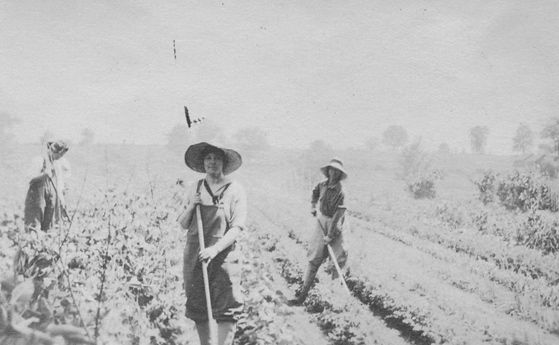
AGRICULTURAL AGE : MANUAL LABOR
We use film in our cameras, develop what we take and scrapbook what we develop. All pictures (because they represent a measurable investment) are valuable. Waste is abhorred. Creative decisions are based largely on the archival quality of available products. Resources are limited, so everything is new.
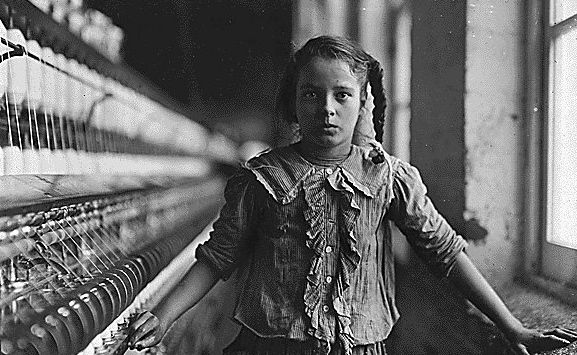
INDUSTRIAL AGE : MANUFACTURING
An industry grows up around our need for better products and more choice. We are introduced to tools that generate something usable from something ready available (think die cut machines.) The goal is to get pages done so we can catch up with our backlog of prints. Magazines help us manufacture “creative” memories by propagating ideas and promoting techniques and products.

TECHNOLOGY AGE : KNOWLEDGE WORK
The digital camera and the Internet change everything.
We can capture an image and immediately see how to make it better. Without the limitations of film and developing, we quickly become photojournalists, drastically increasing the number of pictures we need to manage. As we gain access to unlimited information and online sharing we become more aware of skillful, complex and aesthetic scrapbooking. Products and services explode in response to a seemingly insatiable consumer.
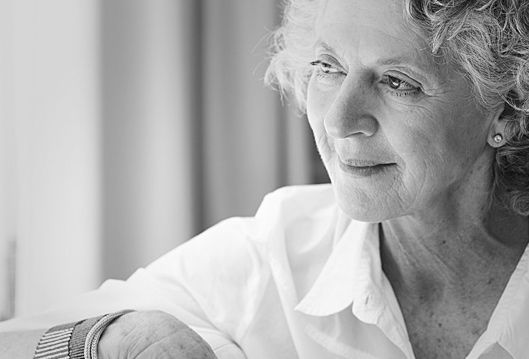
AGE OF CREATIVITY : EMOTIONAL WORK
Surrounded by surplus (pictures + products) and faced with advancing technologies that seem to challenge old paradigms, we discover that value is found in unique perspective and that the cure for excess is authentic expression. Scrapbookers who do the emotional work of bringing themselves fully to the creative process are able to sustain their passion, excavate the stories that matter and find gratitude and clarity for daily living.
ABOUT STACY :As founder of education at Big Picture Scrapbooking and Ali’s friend, I’m eager to promote a scrapbooking philosophy that is inclusive of everyone, supportive of those just starting out and story-based. You can read more of my views at stacyjulian.com.
One more thing … if you haven’t read Seth Godin’s book, Linchpin: Are You Indispensable?, I highly recommend it. Ideas for this post came pouring in, as I was reading!

Comments
Sign in or sign up to comment.
47 comments
I think it is interesting to think about how art changes in the face of excess. Are we able to do more because of the sheer volume of product available to us? Or are we stagnated because there is so much choice?
I took a quilting class last fall with Paula Nadelstern who is someone who has created amazing art under the premise of excess. She does not quilt with scraps (as was the tradition and necessity in a time of scarcity), but rather takes large pieces of fabric and cuts out the elements that are repeated to make a kaleidoscope effect. Her quilts (and art) would not have been possible in a time of scarcity.
How does this apply to scrapbooking, a craft whose very name implies the use of scraps and therefore scarcity? Do we seek out something that is still scarce - the emotional component - as you suggest in your post? Or do we create something that wasn't possible in a time of scarcity? What would that be?
I don't have the answers, but just wanted to throw the idea out there as something to ponder.
Replies
Sign in or sign up to reply.
I've been thinking about this post all day and the paper I wrote for graduate school (or maybe undergrad?) about women's craft and how it was both utilitarian but also a form of art. Interesting.
Replies
Sign in or sign up to reply.
Interesting theory Stacy! I think there have been many progressive movements in the industry and like most of them. I do have to admit that most of those old 'film' photos are very cherished memories as we didn't have a digital camera when our kids were growing up. Now we have one to capture our grandchildren!
Replies
Sign in or sign up to reply.
Stacy, I love your notes and wild mind!! Just order the book to use in a college class I'll be teaching this spring term. The whole concept of emotional work is the basis for the new blog posting I am doing at Digital Designers. It's called PageKraft:WriteTrue + Click. We focus on deep story and truth telling. Katrina Kennedy does the Click part about photos that get to the depth of the memory. Thank you for all you do for our art, Kraft, process and memories. You are a true original and definitely at LinchPIN!!
Replies
Sign in or sign up to reply.
"The cure for excess is authentic expression." SO TRUE! I love all of this. Thank you for writing it, Stacy. Thanks for posting it, Ali.
Replies
Sign in or sign up to reply.
"....sustain their passion, excavate the stories that matter and find gratitude and clarity for daily living." This is why I keep scrapping even though lots of my friends have quit. It is good for me, it helps me count my blessings and see the bigger picture in life instead of drowning in the mundane tasks of life.
Replies
Sign in or sign up to reply.
Dear Stacy,
I love the idea of "emotional scrapbooking" and "that the cure for excess is authentic expression".
When reading your book of "photo freedom" I found my own way of storing and presenting photos and the my scrapbooking approach.
Thanks so much for all your good inspirations at any time!
Replies
Sign in or sign up to reply.